
How to Check Criminal History in Ottawa County
No one Ottawa County search contains the whole record. Start with the event you know. A court case belongs in MiCOURT Case Search, while a recent detention belongs in the county inmate lookup. An arrest narrative stays with the police agency or sheriff that wrote it. Michigan State Police holds the statewide repository record. This split matters because an arrest charge can change before a prosecutor files a case, and a later court result may never appear on the live jail roster.
Prepare the person's complete name and likely spelling variants. A date of birth helps distinguish court and state results, though not every public system shows it. Also note the event date, city, and possible court branch. Those facts prevent a Holland event from being confused with a Grand Haven or Hudsonville case.
- Search MiCOURT by participant name or case number and select the Ottawa court.
- Check the county inmate lookup when current custody is the question.
- Ask the arresting agency for its incident or arrest report.
- Verify a District or Circuit result with the clerk that holds the file.
- Use ICHAT or a fingerprint self-review for the proper statewide record.
Note: A matching name is a lead, while fingerprints are the reliable way to confirm that a Michigan history belongs to one person.
Ottawa Criminal Record Systems Compared
Three Michigan systems are often mistaken for one another. ICHAT shows the public part of the state criminal-history repository. MiCOURT reports public trial-court case information. The Michigan Department of Corrections uses OTIS for people now under MDOC jurisdiction or discharged within the prior three years. None is a countywide warrant tool, and none replaces a certified clerk copy.
| System | Best question | Important limit |
|---|---|---|
| MiCOURT | What was filed and how did the court act? | Suppressed cases and some older data do not display. |
| ICHAT | What public Michigan CHRI matches this name? | No warrants, traffic, juvenile, federal, tribal, or out-of-state history. |
| Ottawa inmate lookup | Is the person in current county custody? | People disappear after release or transfer. |
| OTIS | Is the person under recent MDOC custody or supervision? | No county-jail-only or unsentenced population. |
The official OTIS page illustrates the corrections layer.
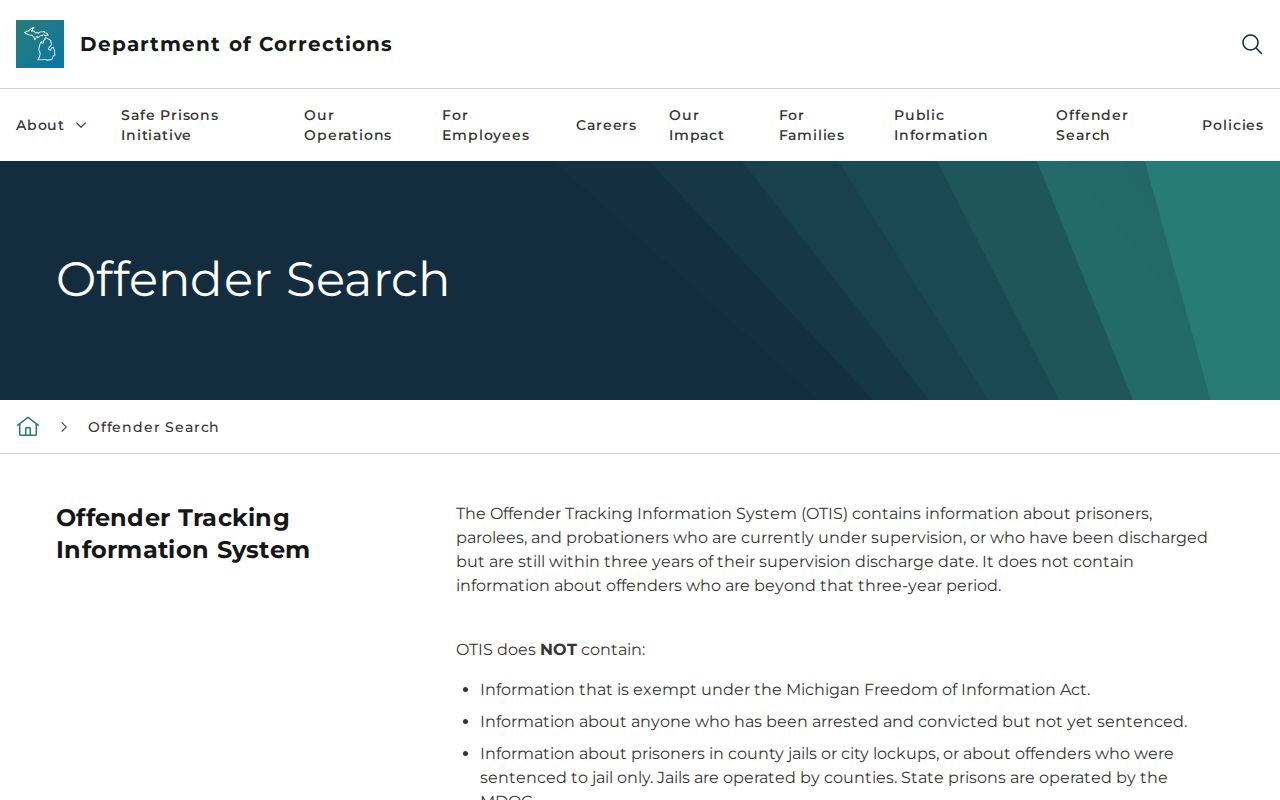
Use that layer only when MDOC status is relevant. A local booking, police report, or pending District Court case calls for a different Ottawa County source.
Official Michigan Background Checks
The Michigan State Police Criminal Justice Information Center maintains the central repository. Its public name product, ICHAT, costs $10 per search. It requires first and last name, date of birth, and sex or gender. Results remain available on the day generated and for seven more days. A ready response does not mean a record was found, so open and read the actual result.
A name search is not fingerprint-confirmed. For a fuller review of one's own Michigan record, a resident asks a local law-enforcement agency to take prints on RI-008, then mails the printed card, cover letter, and $30 to MSP CJIC. MSP sends one certified or notarized response only to the fingerprinted person and advises allowing three to five weeks. Approved Live Scan vendors serve checks authorized by statute, rule, or executive order, but that route sends the response to the designated agency.
| Product | Fee | Basis | Delivery |
|---|---|---|---|
| ICHAT | $10 | Name, birth date, sex/gender | Online public Michigan result |
| Personal record review | $30 | Fingerprints | Mailed only to the subject |
| Extra original | $1 | Same fingerprint request | Additional certified/notarized copy |
| Set-aside processing | $50 | Fingerprints and court packet | Sent to the required parties |
Ottawa's Four-Stop Record Trail
An Ottawa County arrest moves through separate record makers. The arresting agency writes the report. Jail staff create a booking entry and submit qualifying fingerprints. The prosecuting attorney decides what charge to authorize, then the clerk records court events and the final disposition. MSP receives reportable biometric, charging, and judicial data for the statewide repository.
Record flow: Arresting agency › Ottawa County Jail › 58th District or 20th Circuit Court › MSP CJIC.
The source of an error controls where it should be fixed. Ask the agency about an arrest date or charge it supplied. Ask the prosecutor about its charging segment. Ask the court about a disposition. If the source cannot update CJIC electronically, MSP provides the RI-026 challenge process and its Criminal History Help Desk.
The Ottawa County government gateway shows how the courts, clerk, sheriff, prosecutor, and other custodians remain separate offices.
That office structure explains why a sound search follows the record trail instead of relying on one broad query.
Types of Criminal Records
Each Ottawa County criminal record reflects a different point in the justice process. An incident report describes what an agency investigated. Booking data captures intake and custody. A complaint or information states the charge selected for prosecution. The court file then records hearings, pleas, motions, outcomes, and sentence. Public ICHAT is a narrower extract of the state repository, not a duplicate of those local files.
- Arrest and booking records: agency allegations, intake details, bond, and current or past custody.
- Court case files: filed charges, docket events, disposition, judgment, and sentence.
- Warrant records: court orders used by law enforcement, which ICHAT does not publish.
- Supervision records: District probation, MDOC felony probation, parole, and related docket events.
- Registry records: the legally public part of Michigan sex-offender registration data.
Michigan also separates felonies from misdemeanors by statute and court role. Every criminal prosecution starts in the 58th District Court. A misdemeanor remains there. A felony moves to the 20th Circuit Court after a preliminary examination or waiver and bindover. The exact offense statute, not a label alone, controls its penalty.
Ottawa Jail Records Versus Court Files
The Ottawa County Adult Correctional Facility in West Olive is rated for 458 beds and holds pretrial and short-sentence populations. Its free online lookup shows only people in current custody. A complete last name is required. First name, booking date, and gender can narrow the results. The portal warns that data changes fast, false identification can occur, and an arrest does not mean conviction.
After release or transfer, use the 24-hour inmate information line at (616) 786-4140, submit a past-record request, or search the court docket. The official Sheriff iOS app also advertises public inmate views. It is an alternate mobile channel, not an emergency service and not a verified warrant search.
A court file answers the next question: what did prosecutors file, and what did the judge decide? MiCOURT can locate a public case, but the proper District or Circuit clerk remains the source for the official file and certified copies. The full treatment of filed charges and dispositions appears in Ottawa County criminal court cases.
Note: The roster proves custody at the time shown, not guilt, a final charge, or the complete history of an Ottawa County case.
What a Ottawa County Criminal Record Shows
Michigan repository data is organized around identity and event segments. Identity fields can include names, aliases, birth date, physical descriptors, scars or tattoos, SID, and an FBI number when applicable. An arrest segment can show the date, reporting agency, identifiers, fingerprints, and arrest charges. Prosecutor and court segments add the authorized charges, statute, case number, outcome date, and sentence.
| Name and identifiers | Name, aliases, birth date, descriptors, and repository numbers where public. |
|---|---|
| Arrest data | Agency, arrest date, event cycle, and allegations reported with fingerprints. |
| Charges | Offense wording, statute, and later prosecutorial action. |
| Disposition | Pending, guilty, dismissed, acquitted, or nolle prosequi outcomes. |
| Sentence | Jail, prison, probation, fines, costs, or other ordered terms when reported. |
| Supervision | Custody, probation, or parole status within the source's published scope. |
- Disposition
- The court's outcome for a charge.
- Nolle prosequi
- A formal decision by the prosecutor not to continue a charge.
- Bindover
- Transfer of a felony from District Court to Circuit Court after probable cause is found or examination is waived.
- Personal recognizance
- Release on a signed promise to appear, subject to conditions.
Ottawa Criminal Caseload in Context
The Ottawa County Prosecuting Attorney's 2025 report records 8,000 combined felony, misdemeanor, and juvenile matters, up 1.0% from 7,922 in 2024. Felony caseload rose 5.5%, from 1,861 to 1,963. Misdemeanors increased 0.6%, from 5,020 to 5,049, while juvenile delinquency petitions fell 5.1%, from 1,041 to 988.
These are prosecutor caseload figures. They are not crime rates, arrest totals, or conviction counts. One case may contain several charges, and a filed matter may end in dismissal, acquittal, plea, or trial. The report also identifies four District and Circuit sobriety or recovery court programs plus Holland Mental Health Court. Those programs appear within court records, but participation details may be restricted.
Public Access Laws
Michigan law opens many government records while preserving specific limits. The Michigan Freedom of Information Act applies to nonexempt records held by public bodies, but it does not override laws protecting juvenile, victim, medical, security, or active-investigation material. Court records follow Michigan Court Rule 8.119 and clerk procedures. State criminal history follows the Bureau of Criminal Identification Act.
Key laws:
Michigan FOIA, MCL 15.231-15.246 permits access to nonexempt public-body records.
MCL 28.242a and 28.243 govern CHRI dissemination, qualifying biometric reporting, and final dispositions.
Michigan Court Rule 8.119 governs court-record inspection and restrictions.
MCL 780.621-780.624 governs set-aside eligibility, effects, and restricted records.
FOIA is a route to an existing executive-agency record. It does not force a court to create a summary or disclose a sealed file. Choose the custodian first, then use the access rule that applies to that office.
Ottawa FOIA Fills Record Gaps
The Sheriff's Records Unit is the fallback for Sheriff-created crash, criminal, and service reports. A person with their own crash complaint number can use the official crash-report link. Other crash requests and Sheriff criminal or service reports go through the Ottawa County FOIA Center. Written requests may be submitted online, by fax, mail, or in person.
The online workspace stores requests, messages, and produced files. Michigan FOIA gives the public body five business days for its initial response. That response may grant or deny access, give fee instructions, or invoke one ten-business-day extension. Production may take longer than the first response, especially when staff must review audio, video, victim data, or an active investigation.
The Ottawa County FOIA Center is the official request route for those Sheriff records.
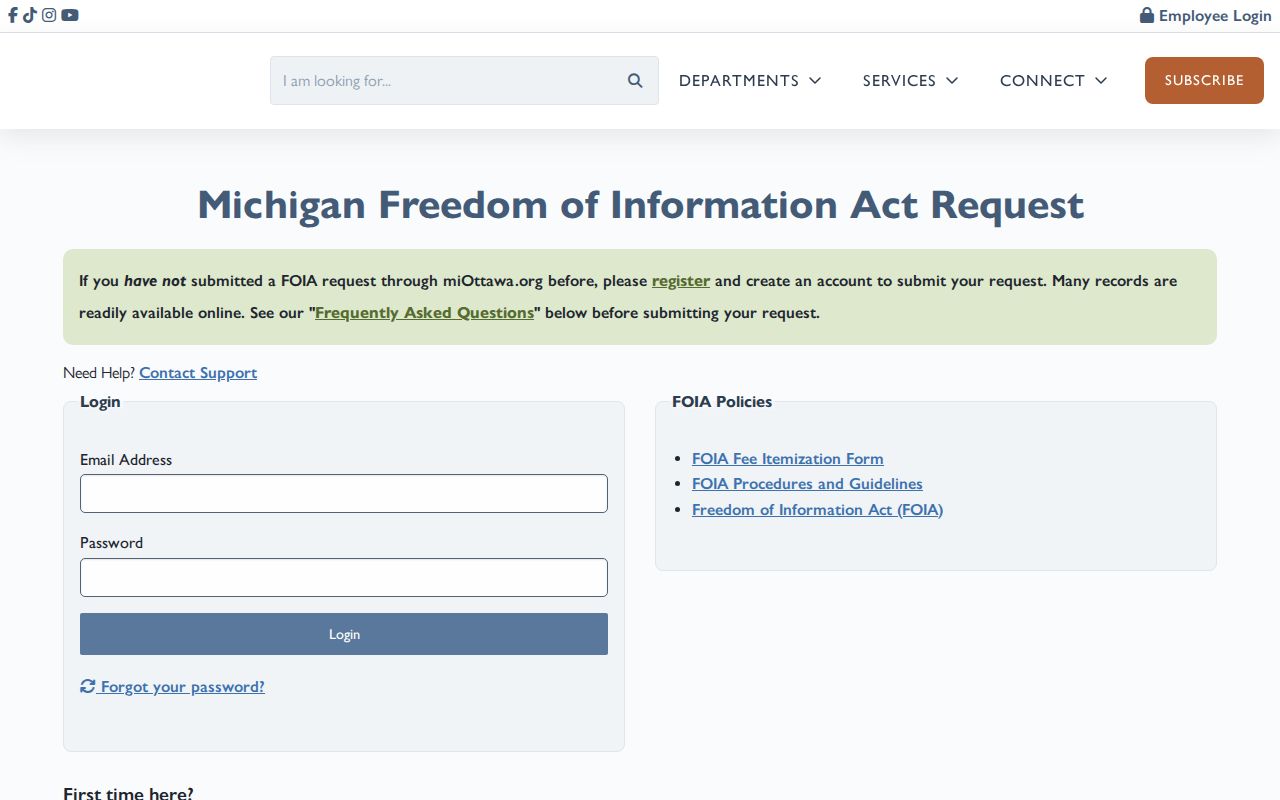
Describe the incident date, place, event type, involved name, and exact components wanted. A focused request gives records staff enough detail to locate the file and identify any lawful redactions.
Sealed, Expunged & Restricted
Michigan uses the term set aside. Juvenile history and legally suppressed matters do not appear in public ICHAT, and several juvenile case types stay out of MiCOURT. A set-aside makes the conviction nonpublic as the statute directs, though MSP keeps a restricted record for uses allowed by law.
Application-based relief is filed in the court of conviction. Ottawa County misdemeanors generally return to the 58th District Court, while felonies return to the 20th Circuit Court. The MSP packet includes fingerprints, the application, and certified judgment or register of actions, with a separate $50 MSP fee. Waiting periods depend on the number and type of convictions, and exclusions apply.
Automatic Clean Slate began in 2023. Eligible misdemeanors can be set aside after seven years, while up to two eligible felonies can clear ten years after the later of sentence or completion of MDOC imprisonment. Assaultive crimes, serious misdemeanors, many offenses punishable by ten or more years, impaired-driving offenses, and other listed categories are excluded. Verify the result through ICHAT, a fingerprint self-review, and the court of conviction.
Ottawa Criminal Court Branches
The Grand Haven Courthouse at 414 Washington Avenue contains the Circuit Court Records counter in Room 320, the 20th Circuit Court, the Grand Haven branch of 58th District Court, and the Prosecuting Attorney. District Court also operates from Holland and Hudsonville. Contact the branch that handled the matter, since Grand Haven does not hold every District Court file.
Grand Haven Records
414 Washington Ave, Room 320
Grand Haven, MI 49417
(616) 846-8315
Monday-Friday, 8 a.m.-5 p.m.
Holland District Court
85 W 8th St
Holland, MI 49423
(616) 392-6991
Mon-Thu 8-5; Fri 9-5
Hudsonville District Court
3100 Port Sheldon Rd
Hudsonville, MI 49426
(616) 662-3100
Mon-Thu 8-5; Fri 9-5
Probation follows the same mixed structure. District Court supervises misdemeanor probation through its three branches. MDOC Region 4 handles adult felony probation and parole from Grand Haven, Holland, and Hudsonville offices. There is no verified public probationer name search, so use the sentencing docket and OTIS, then contact the proper office.
Criminal Records by City in Ottawa County
City routes differ sharply. Holland has its own public-safety records unit but crosses the Ottawa-Allegan county line. Grand Haven uses a combined police, fire, and records department. Hudsonville has no city police department and contracts with the Ottawa County Sheriff. These local facts determine which agency holds the first report and which court or jail should be checked next.
Holland Criminal History
35,372 residents in the 2025 estimate; police records route through Holland Public Safety, while the incident location controls the county.
Grand Haven Criminal History
11,038 residents in the 2025 estimate; the Department of Public Safety has a direct records and FOIA process.
Hudsonville Criminal History
7,964 residents in the 2025 estimate; contracted sheriff deputies create local incident records.
Correcting Ottawa Criminal Record Errors
Begin with the original source. A wrong arrest date or agency charge belongs with the arresting police department. A charging error belongs with the prosecutor. An incorrect disposition belongs with the District or Circuit clerk. MSP cannot simply replace the source agency's data without support from that custodian.
For a public repository error, MSP indexes RI-026, the Challenge Request of Public Criminal History Record. A fingerprint personal review can show public and nonpublic Michigan data linked to one's prints, which helps distinguish an identity mismatch from a reporting mistake. Keep the response, the related court record, and any source-agency correction together.
Write down when each Ottawa County source was checked. That simple timeline helps separate a genuine conflict from a normal delay between an agency update, a clerk entry, and the next public repository refresh.
The MSP criminal-history overview sets out the scope and correction routes.
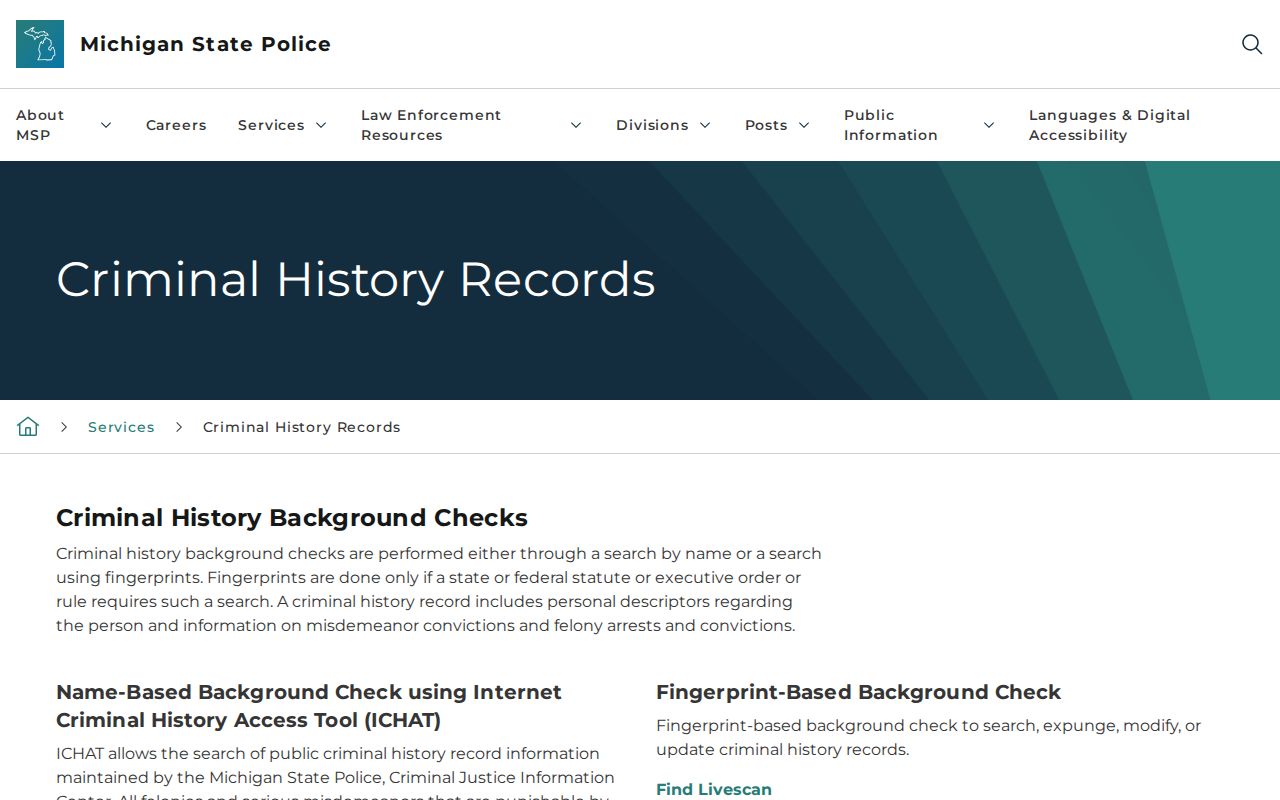
After the source changes its segment, check MiCOURT, ICHAT, or the fingerprint response again as appropriate. Different systems update on different schedules, so save written confirmation from the office that made the correction.